Commercial Waste Removal in Notting Hill

Commercial waste removal in Notting Hill needs to be practical, discreet and organised around the realities of busy premises. We handle mixed business waste collections for offices, shops, hospitality spaces, studios and managed properties, with a focus on separating reusable, recyclable and residual materials where that can be done responsibly. The result is a straightforward service that helps businesses clear accumulated waste without turning routine disposal into a disruption.
Our work covers everyday commercial rubbish as well as bulkier items that need careful lifting and sorting. That can include office furniture, packaging, broken fittings, shelving, back-of-house clutter and general non-hazardous waste that has built up over time. If you need to compare options first, see our pricing and quotes information, then decide how much help you want from collection through to loading and disposal.
For a wider view of what we can handle, our service pages cover specific waste streams and property types. You may want to look at business waste removal for routine commercial clearances, or the broader waste removal page if you are weighing up a one-off clearance against a more general service. We aim to make the process clear from the outset, so it is easier to choose the right level of help for your premises.
Routine waste collection for workplaces
Every workplace generates different waste, so the right service depends on what is leaving the building and how often it builds up. Office environments commonly need removal of desks, chairs, paperwork, packaging, IT peripherals and mixed rubbish from clear-outs or reorganisations. Retail units may need help with display fixtures, cardboard, shelving and end-of-line stock waste. Hospitality sites often have heavier back-of-house volumes, including worn furniture, broken equipment and mixed refuse from refurbishment or refresh work.
We keep the service practical by matching the collection to the job rather than forcing every clearance into the same pattern. That means you can arrange help for a single room, several floors or an entire premises, depending on what is ready to go. If you are dealing with larger or heavier items, the page for furniture clearance explains how this type of load is approached, while furniture disposal covers the end point for items that are no longer needed.
Useful planning point: if waste is spread through more than one area, it usually helps to group similar items together before collection. That makes the sorting process smoother and can reduce time spent moving items from one room to another. Mixed premises are still manageable; the idea is simply to keep the handover clear so the clearance can begin efficiently.
Office and workplace clearances

Office waste removal often involves more than emptying bins. A move, refit or consolidation can leave behind outdated desks, storage units, filing cabinets, chairs, monitors, printers and general clutter from cupboards and store rooms. We work with these clearances as a practical logistics task: identifying what needs to go, separating items that can be treated differently and removing them in a way that suits the site layout and building access.
For organisations that handle confidential records, there is also a distinct need to think about secure disposal. Our confidential shredding page is relevant where paperwork or records must be destroyed rather than mixed into ordinary waste. When a workplace is being vacated or reorganised, that distinction matters because different materials may need different handling before they leave the site.
Good office clearance work also depends on access and timing. Loading bays, lifts, stairs, shared entrances and nearby traffic restrictions can all affect how the collection is arranged. If you are not sure how to describe the load, a short written summary is usually enough to begin with. You can then ask for a quotation based on the items, the access available and the scale of the clearance.
Shops, hospitality venues and mixed commercial premises
Shops and hospitality businesses often need waste removal that is responsive to changing stock, seasonal turnover and refit cycles. A retail clearance may include packaging, damaged stock, old fixtures, mannequins, display stands and backroom waste that has built up around trading hours. Restaurants, cafés and pubs may need bulky tables, chairs, counters or shelving removed as part of a reset or small refurbishment. We treat these as working premises, so the aim is always to keep disruption contained.
Where waste is generated alongside refurbishment, the builders waste clearance page is useful because it covers rubble, offcuts and mixed construction debris. That can be relevant to shops and venues as well as building sites, especially when new counters, partitions, fittings or finishes are being put in. For full premises changes, the choice is often between a targeted item-by-item collection and a broader clearance of the space.
Commercial jobs are rarely about a single type of item, so the easiest approach is to think in categories: reusable furniture, recyclable packaging, broken equipment and residual waste. Keeping those categories separate where possible helps the collection move more smoothly and gives a better basis for deciding what should be removed first. If you are preparing a premises for handover, it is sensible to start with the items taking up the most room.
Managing bulky items and special disposal needs
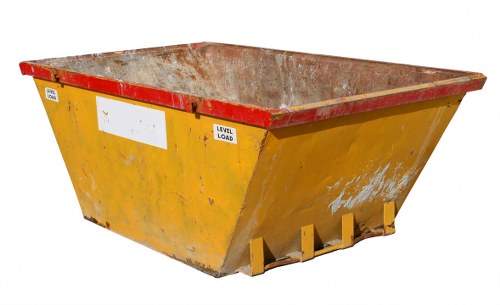
Some commercial waste is straightforward, but bulky items need more planning. Large cabinets, sofas, appliance units, reception furniture and over-sized storage pieces can be awkward to move through narrow corridors or tight stairwells. Our service can include the lifting, loading and removal of these items, provided they are within the scope of the work arranged. For item-specific clearances, the pages for mattress and sofa disposal and fridge and appliance removal describe two common categories in more detail.
Not every item should be treated the same way. Some waste is best separated because it contains components that need different handling, while other items may simply need safe removal from a crowded property. If your premises includes a garage, storeroom or similar back area, the garage clearance page may be helpful as a guide to the kind of mixed build-up often found in those spaces. The work is still commercial waste removal, but the layout and contents may be different from a standard office job.
When weighing up disposal options, it is often worth asking what can be set aside for reuse or recycling before the rest is taken away. That is not always possible for every load, but it is a sensible consideration where the items are in serviceable condition or made up of separable materials. A careful approach keeps the clearance focused and avoids treating everything as one undifferentiated pile.
How we approach a quotation
Commercial waste removal is easier to price when the scope is clear. The main factors are the type of waste, the amount involved, where it is located, how it needs to be moved and whether any items require separate handling. A small office clear-out and a mixed premises clearance can both fall under the same service, but they are unlikely to involve the same amount of labour or loading time. That is why descriptions matter more than broad labels alone.
Before you request a quotation, it helps to note the room or area, the approximate volume, and whether there are stairs, lifts or restricted access points. If items are awkward, heavy or spread across several floors, say so plainly. You do not need to overcomplicate the enquiry; a concise list of items and a few practical details is usually enough to begin with. If you want to arrange the next step directly, use the contact us page.
Keep it simple: one message with the main items, the location in the property and the preferred timing is often enough to start the process. Photos can be useful where the load is mixed or bulky, but they are most helpful when they show both the items and the access route. That gives a clearer picture of what needs to be moved.
Household-style waste inside commercial properties
 Some commercial premises contain waste that looks more domestic than corporate. A flat above a shop, a staff accommodation unit, a small salon or a practice room can accumulate the same types of items found in home clearances, including furniture, loose items, soft furnishings and general clutter. In those cases, the relevant service may overlap with our flat clearance or home clearance pages, even though the collection is still arranged for a business setting.
Mixed-use properties often need a flexible approach because the contents can shift between commercial and domestic categories. A storage room may hold old chairs and boxes; a treatment room may include shelving and packaging; a shared area may contain a mixture of broken fixtures and ordinary rubbish. The practical question is not the label on the building, but what actually needs removing and how it can be taken out safely.
Where the clearance includes an attic or upper storage level, the loft clearance page can give a clearer sense of how difficult-to-access spaces are treated. If the aim is to empty a whole property rather than just one room, the broader house clearance option may also be relevant. The right choice depends on the contents and the access, not simply on whether the space is traded from.
About Notting Hill
Notting Hill is a district in west London within the Royal Borough of Kensington and Chelsea, best known for its mix of residential terraces, mews streets and a busy high-street atmosphere centred on Portobello Road. The area developed significantly in the nineteenth century, with much of its housing built in long runs of stucco-fronted terraces and later converted flats. Many streets still show the planned Victorian and Edwardian fabric that gives the district its distinctive character, while smaller lanes and mews retain a quieter scale behind the main roads. The result is an urban landscape that feels layered rather than uniform, with retail, housing and local services interwoven across a relatively compact area. Portobello Road is especially associated with markets and antiques trading, but the district also includes neighbourhood squares, garden squares and side streets that create a more varied pattern of movement and everyday use. Ladbroke Grove and Westbourne Grove are among the better-known thoroughfares, while the wider neighbourhood is tied to nearby transport links and the edge of central London’s westward expansion. Notting Hill Carnival, first established in the 1960s, has become one of the most visible cultural events in London, bringing music, parades and street celebration to the area each year. Green spaces such as Kensington Memorial Park and the nearby communal garden squares add breathing room within the denser streets, and the district’s architecture, market culture and long-running cultural associations continue to shape how it is understood today.
Clearance for refurbishments and property changes
Commercial waste removal often sits alongside refurbishment rather than replacing it. When a unit is being reconfigured, old fittings, damaged fixtures, redundant stock and packaging can all become part of the same clearance. In those situations, it helps to separate what is being retained from what is leaving the premises, especially if trades are still working around the space. A well-planned clearance reduces the chance of items being moved twice and keeps the site more manageable.
For jobs involving building work, the hazardous waste disposal page should only be considered where the materials actually fall into a controlled or specialist category. Most commercial clearances do not include hazardous substances, and it is important not to assume that every strong-smelling, broken or dusty item is treated in the same way. If the load includes unusual materials, they need to be identified before the collection is arranged.
When a project reaches the handover stage, the remaining waste is often the last obstacle between a live site and a finished one. That does not mean every item needs a separate booking; rather, it means the clearance should fit the final state of the premises. If you have a mixed load after works, the broad service page for business waste removal remains the best starting point for deciding how the collection should be organised.
Recycling, sorting and responsible disposal
Responsible commercial waste removal depends on sorting as much as on lifting. Cardboard, metal, wood, fabric, electrical items and general waste may all be present in one clearance, but they do not all follow the same route once collected. The more clearly the load is described, the easier it is to deal with it in an orderly way. That applies whether the job is a single-floor office, a small shop or a larger mixed premises with several waste types.
Our recycling and sustainability page explains the general approach to reusing and diverting suitable material where possible. Not every item can be recovered, but a sensible sorting process can still make a difference to how the clearance is handled. For businesses that generate repeat waste, it is useful to think of the work in terms of recurring streams rather than one-off clutter, because that makes later collections easier to specify.
If you are ready to move forward, the simplest next step is to send a short outline of the waste and the premises. Tell us what needs removing, where it is and how it is accessed, then ask for a quotation. If you prefer to book online, the book online page provides a direct route to start the arrangement.